
A free vial is only useful if you test it properly. Most people spray it once, decide in thirty seconds and buy or discard a bottle based on the opening, which is the part of a fragrance that disappears first. This guide gives a short routine for testing a sample on skin, over a day and in the right weather, so the full bottle is not a mistake. This article is general information, not medical advice.
The routine also includes the part most fragrance advice skips: what the label does and does not tell you, and what the FDA says about fragrance ingredients and allergic reactions.
- Blotter versus skin, and why the vial beats the counter spray
- Top, heart and base notes, and how long to wait
- Season, weather and how many to test per visit
- Fragrance allergies and what the FDA says about labels
Blotter First, Skin Second
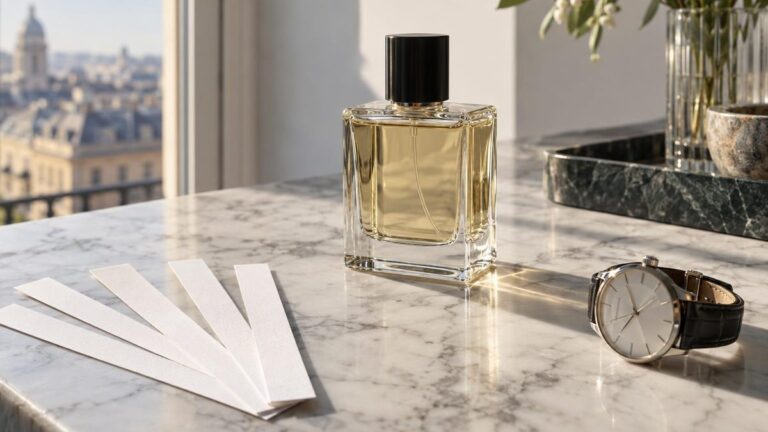
A paper blotter strip shows the opening of a scent and lets you compare several in a minute without wearing any of them. Use it to eliminate, not to choose. The candidates go on skin, one on each wrist or inner elbow, where warmth changes the scent in ways paper cannot show. Do not rub the wrists together; it crushes the top notes and blurs the comparison.
The Three Stages, and How Long to Wait
Most fragrances unfold in three stages. The top notes are the first ten to fifteen minutes, usually citrus, herbs or light fruit. The heart arrives over the next hour and is the scent’s real character, often floral or spicy. The base is what remains after three or four hours: woods, musks, amber, vanilla. A full bottle is a purchase of the base, because that is what you and everyone near you smell for most of the day.
- Wait at least four hours before deciding. A vial lets you do this at home; a counter spray usually does not.
- Test no more than two or three scents on skin per day. After that the nose stops distinguishing them.
- Smell your wrist from a hand’s length away, not pressed to the nose, to judge how it reads to other people.
- Repeat the favorite on a second day. A scent that pleases twice is a safer purchase than one that dazzled once.
Season and Weather
Heat amplifies a fragrance and cold mutes it, so the same vial smells heavier in July than in January. Test in the conditions you plan to wear it: a summer scent on a warm day, a winter one in a heated room. Lighter citrus and aquatic styles suit heat; heavier woods, resins and gourmands suit cold. A sample tested in the wrong season is the most common reason a full bottle disappoints.
Labels, Allergies and What the FDA Says
The FDA’s page on fragrances in cosmetics explains two things worth knowing before you test. First, a fragrance formula can be listed on the label simply as “fragrance”, because the law does not require a company to reveal trade secrets, so the ingredient list will not name the components. Second, the law does not require FDA approval before a cosmetic goes on the market, though it must be safe when used as directed.
The same page notes that some components of fragrance formulas may cause allergic reactions or sensitivities in some people, and that even a product labeled “unscented” may contain fragrance ingredients added to mask other smells. If you react to scents, test on a small patch of skin first, stop at any redness or itching, and talk to a doctor or dermatologist about patch testing before buying anything full size.
A Simple Testing Log
Keep a note on your phone with four lines per sample: the name, where it went on skin, what it smelled like at one hour and at four hours, and the weather. After a few vials the pattern of what you actually enjoy appears, and it is rarely the opening that sold you at the counter. The log also makes the next sample choice at checkout faster.
Buying the Bottle Without Regret
Once a sample passes two wearings, buy the smallest full size first; a fragrance you love at thirty milliliters is cheaper to learn from than one you abandon at a hundred. Check the return policy for opened fragrance before paying, use a credit card so the CFPB’s dispute rights apply if the bottle is not as described, and ignore the pressure of a countdown timer. This is general information, not financial advice.
Testing a Sample at a Glance
| Step | What to do | Why |
|---|---|---|
| Blotter | Compare several, eliminate most | Shows the opening only |
| Skin | Two or three per day, no rubbing | Warmth reveals the real scent |
| Wait | Four hours before deciding | The base is what you buy |
| Season | Test in the weather you will wear it | Heat amplifies, cold mutes |
| Repeat | Second wearing on another day | Confirms the first impression |
| Patch test | Small area first if you react to scents | Fragrance ingredients can irritate |
Frequently Asked Questions
Why does a perfume smell different on me than on the strip?
Skin warmth and chemistry change how the notes develop. The strip shows the formula; the wrist shows how it wears on you.
How many fragrances can I test in one visit?
Two or three on skin. Use blotters to narrow the field first, and keep the vials for a second day.
Is “unscented” the same as fragrance-free?
No. The FDA notes that unscented products may contain fragrance ingredients used to mask other smells. If scents bother you, read the ingredient list and patch test.
How long should a sample last?
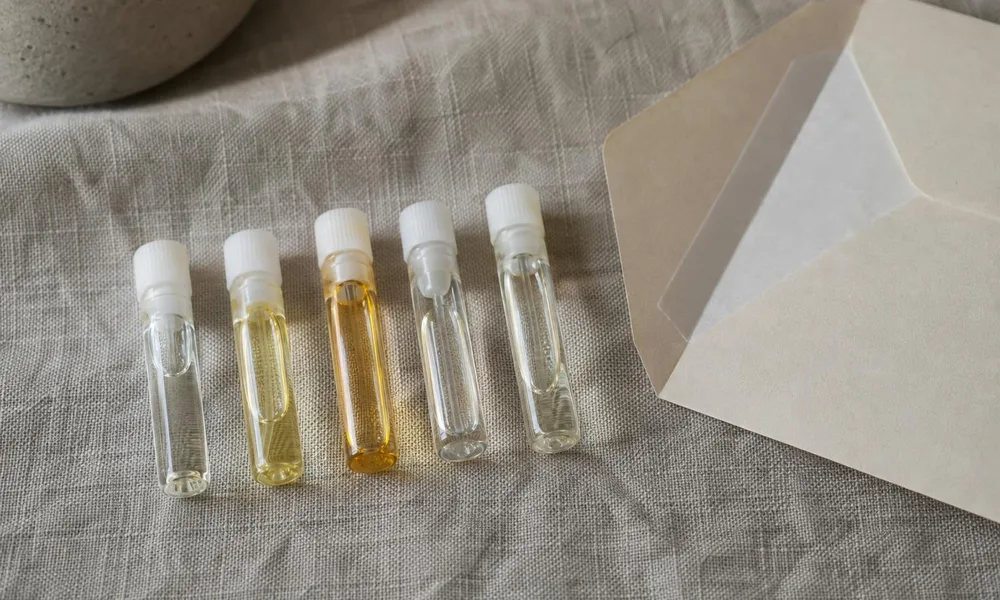
One to two milliliters gives three or four wearings, which is exactly enough for the routine above.
