
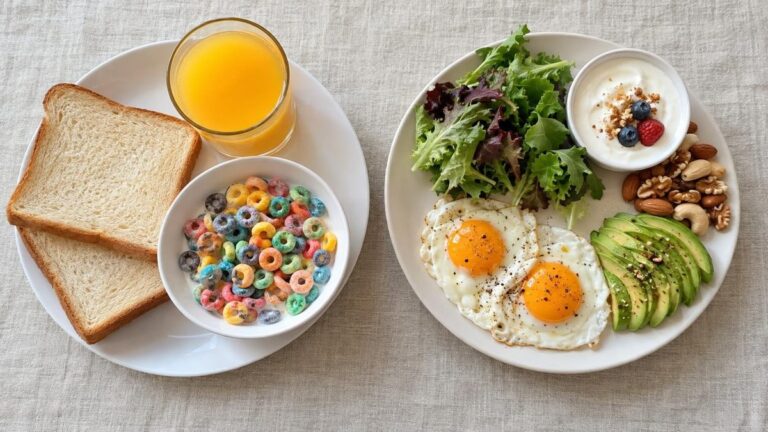
Two meals with the same calories can produce completely different glucose curves. One sends the reading up by 80 points in half an hour; the other barely registers. The difference is almost always the type and amount of carbohydrate, what it is eaten with, and how processed it is. This guide lists the foods that spike blood sugar, ten that do not, and the simple plate rule that lets you keep most of what you like.
This article is general information, not medical advice. Talk to your care team before changing any treatment.
- Why carbohydrate type decides the curve
- The foods that spike readings fastest
- Ten foods that keep glucose steady
- The plate method and a covered dietitian visit
Why Some Foods Spike and Others Don’t
Glucose in the blood comes mostly from carbohydrate. Refined carbohydrate, with the fiber stripped out, is digested in minutes; whole foods with fiber, protein and fat take longer, so the same grams of carbohydrate arrive over hours instead of all at once. Liquids are the extreme case: a glass of juice has the sugar of three oranges and none of the fiber, and it hits the bloodstream before you finish the glass. The NIDDK guide to eating with diabetes calls this carbohydrate counting and the plate method, two ways of managing the same idea.
Portion still matters. Brown rice spikes less than white rice, but two cups of it spike more than half a cup of either. A CGM such as the Dexcom G7 or Libre 3 shows this in real time, which is why many people learn more about their own triggers in two weeks of wearing one than in years of reading lists.
Foods That Spike Blood Sugar Fast
| Food | Why it spikes | Easier swap |
|---|---|---|
| Fruit juice and smoothies | Sugar without fiber, in liquid form | Whole fruit, water with lemon |
| Sugary cereal and granola | Refined grain plus added sugar | Plain oats with nuts |
| White bread, bagels, crackers | Fine flour digests like sugar | Whole-grain or sourdough, smaller portion |
| White rice and instant mashed potatoes | Starch with no fiber | Brown rice, lentils, roasted potatoes with skin |
| Soda, sweet tea, energy drinks | Pure sugar, fast absorption | Sparkling water, unsweetened tea |
| Candy, pastries, flavored yogurt | Added sugar on top of refined flour | Plain Greek yogurt with berries |
| “Sugar-free” cookies and bars | Maltodextrin and starch still raise glucose | Nuts, cheese, a boiled egg |
| Dried fruit and fruit bars | Concentrated sugar in small volume | Fresh berries |
10 Foods That Don’t Spike Blood Sugar
- Eggs: protein and fat, essentially no carbohydrate; the breakfast that keeps the morning reading flat.
- Plain Greek yogurt: more protein and less sugar than regular yogurt; add berries, not honey.
- Nuts and seeds: almonds, walnuts, pistachios, chia; fiber and fat slow everything eaten with them.
- Avocado: fat and fiber; on whole-grain toast it blunts the bread’s effect.
- Beans and lentils: carbohydrate, but wrapped in so much fiber and protein that the curve is slow and low.
- Leafy greens and non-starchy vegetables: spinach, broccoli, peppers, zucchini; fill half the plate with them.
- Fish and chicken: grilled or baked, they add protein without carbohydrate.
- Berries: the lowest-sugar fruit; a cup of strawberries or raspberries fits most plans.
- Steel-cut or rolled oats: slow carbohydrate; skip the instant packets with sugar.
- Cheese: protein and fat; a good partner for the crackers you were going to eat anyway.
None of these is “free” in unlimited amounts, and people respond differently. The list works as a starting point for the readings you log in Glucose Buddy or a similar app, where each meal can be tagged and compared.
The Plate Method in One Minute
- Half the plate: non-starchy vegetables.
- One quarter: protein (eggs, fish, chicken, tofu, beans).
- One quarter: carbohydrate with fiber (whole grains, starchy vegetables, fruit).
- Drink: water, unsweetened tea or coffee, milk in moderation.
- Order on the plate: vegetables and protein first, carbohydrate last; eating in that order lowers the peak.
Getting Help With the Plan, Covered
Medicare Part B covers medical nutrition therapy with a registered dietitian for people with diabetes or kidney disease, with a doctor’s referral and nothing to pay when the provider accepts assignment; the Medicare.gov nutrition therapy page lists the hours included. Most commercial plans cover dietitian visits for diabetes as well, and a health savings account or FSA can pay the copay with pre-tax money, as IRS Publication 969 describes. Grocery delivery and store loyalty programs often add rewards for produce; our guide to free food and snack samples covers the ones worth joining.
This section is general information, not financial advice.
Frequently Asked Questions
Is fruit bad for blood sugar?
Whole fruit, in normal portions, fits most plans; berries, apples and pears spike least. Juice and dried fruit are the ones to limit.
Does eating protein with carbohydrate really help?
Yes. Protein and fat slow stomach emptying, so the same carbohydrate arrives over a longer time and the peak is lower.
What about artificial sweeteners?
They do not raise glucose directly. The issue is the products they come in, which often carry refined starch. Check the total carbohydrate on the label, not the sugar line.
How long after a meal should I check?
One to two hours after the first bite is when the peak shows. Your clinician will say which timing to use so readings can be compared week to week.
